Author
David S. Sherman, Ph.D., is a psychotherapist, former adjunct faculty member in a graduate psychology program, technology entrepreneur, and novelist.
He earned his A.B. in Psychology and Social Relations from Harvard, his M.A. from USC, and his Ph.D. from UCLA. His fiction draws on decades of clinical experience to
explore identity, guilt, belief, consciousness, and moral
responsibility.
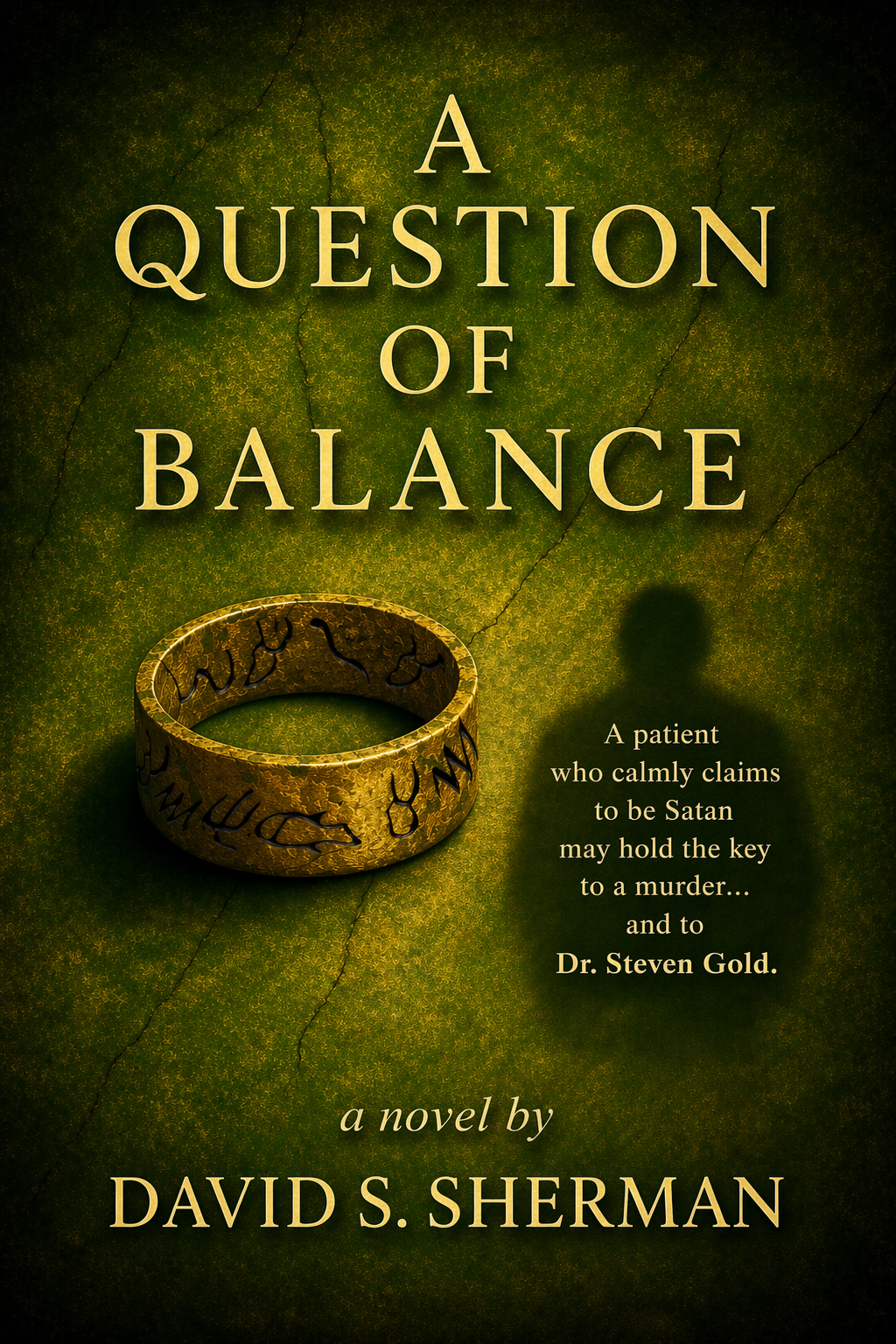
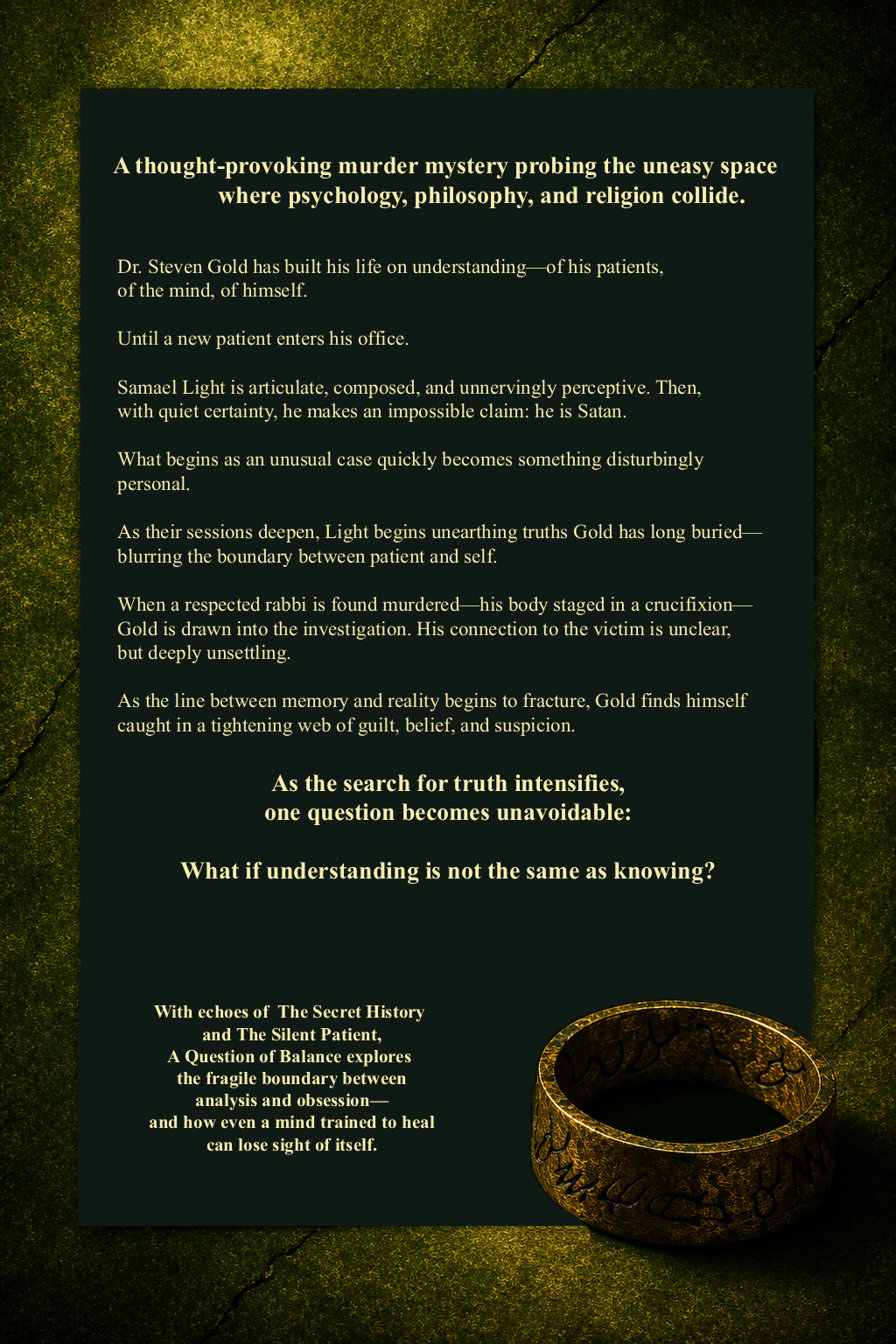
A Question of Balance is his debut novel.
Essays
Reflections on identity, guilt, belief, style, authorship, and the
uneasy space between understanding and knowing.
Read essays on Substack →
Music
I listen to a wide variety of music while writing, reading, and revising.
Here are a few of the playlists I've created and listen to most often—different kinds
of accompaniment for different kinds of thought.
Much of my work begins as fragments—notes jotted down throughout the day
and night, often without clear connection. Music helps me return to them,
to sit with them long enough for patterns to emerge and for something more
coherent to take shape—though not always to resolve.
It also helps quiet the background noise of life when I’m trying to
concentrate. I don’t use it as background so much as a way of sustaining
attention—holding a space in which ideas can be revisited, tested, and,
at times, transformed.
The Sound of Thought
Jazz as thought. Piano trios and modern jazz shaped by tension
rather than resolution—music that moves without settling, allowing
thought to deepen without distraction. For revision where meaning is
uncertain, identity unstable, and answers arrive, if at all, indirectly.
Post-bop, ECM, and avant-garde: space, tension, introspection.
Gold’s Romantic Literature Playlist
Classical as feeling. Quiet enough to reveal what’s there,
structured enough to keep the mind from drifting. It doesn’t lead,
but it doesn’t disappear either—sitting just beneath language, where
meaning sharpens and subtle inconsistencies begin to emerge.
Neoclassical and Romantic minimalism: emotion, reflection, atmosphere.
Changing Light
Jazz as movement. A broader, more changeable field of
sound—less narrowly tuned to a single mood, but equally suited to long
stretches of concentration. For work that benefits from openness,
variation, and the occasional shift in tone. Hard bop and bebop:
groove, swing, propulsion.